


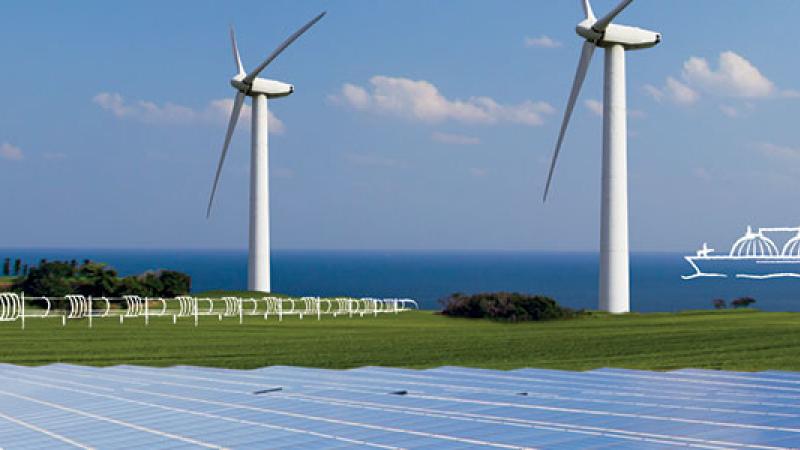
能源结构的脱碳将反映在投资趋势上,到2050年,用于可再生能源的资金将增加两倍。相反,化石燃料支出将下降约三分之一。总的来说,能源支出的速度将放缓到如此程度,到本世纪中叶,作为gdp的一个百分比,的支出将比今天少44%。
电气化及其内在效率将导致人类能源需求从20世纪30年代中期开始下降。
到2050年,能源支出占gdp的比例将下降44%。
能源结构正在迅速脱碳;煤炭已经见顶,石油将在2023年达到峰值,天然气将从2026年起成为大的单一能源。到本世纪中叶,可再生能源和化石燃料将平均分享供应。
我们预测的快速转变将不足以达到亚2?C气候目标。几项措施的有力结合是实现“巴黎协定”雄心的唯一途径。
自工业时代以来,经济增长和能源使用一直在增长,但这种关系将在2035年终脱钩,届时能源需求将开始下降,国内生产总值(GDP)将继续上升。
“董事会和内阁的注意力应该集中在正在展开的戏剧性的能量转换上。随着货币和政策日益青睐天然气和可再生能源,迅速电气化的能源系统将带来效率提高,超过国内生产总值和人口增长。这将导致未来半代内需要更少的能源,“DNVGL集团总裁兼席执行官雷米·埃里克森(Remi Eriksen)说。“过渡是不可否认的。去年,可再生能源比化石燃料增加了更多的可再生能源,这反映在贷方投入资金的地方。“
化石燃料如果在我们的能源未来中发挥重要的作用,它在能源结构中所占的份额将从今天的80%左右下降到本世纪中叶的50%,另一半将由可再生能源提供。到2026年,天然气将成为唯一的大能源,到2050年将满足能源需求的25%。石油将在2023年达到顶峰,煤炭已经见顶。太阳能光伏(占能源供应的16%)和风能(12%)将成为可再生能源中重要的参与者,两者都将满足大部分新的电力需求。
电气化的趋势已经笼罩着汽车工业。到2027年,欧洲销售的新车中有一半将使用电池供电,五年后、印度和北美也将如此。到2050年,运输部门在能源需求中所占份额将从27%下降到20%。
能源需求的减少将反映在投资上,总支出将从今天的5.5%降至占GDP的3.1%。由于化石燃料将在一个较小的蛋糕中占有更小的份额,支出将减少三分之一,降至2.1万亿美元。这将被可再生能源(2.4万亿美元)和电网支出(1.5万亿美元)两倍的增长所抵消。随着风能和太阳能项目通常需要更多的前期CAPEX,然后更少的运营支出,这一支出的性质也将发生变化,这与石油和天然气相反。
变暖的温度将超过“巴黎协定”规定的2度上限,尽管能源过渡的负担得起的性质意味着,有足够的资金用于采取特别措施,进一步减少碳排放。没有灵丹妙药和能源效率,可再生能源和碳捕获和储存(CCS)都必须加强,以应对气候变化。
“我们需要利用能源转型的负担能力,并采取特别措施,创造一个可持续的未来。我们有机会提高能源效率、可再生能源以及碳捕获和储存,以满足“巴黎协定”的要求,但我们必须立即采取行动。
DNVGL为可再生能源和油气行业提供服务,“能源过渡展望”已成为能源未来的一个、公正的声音。在其第二年,该模型已进一步完善,并作出了更积极的电气化预测(45%的能源需求由运营商对40%),而总能源需求略高(6%)。
原文如下: Global spending on energy, as proportion of economic output, is set to slow sharply because the world’s energy demand will decline from 2035 onwards - that is according to DNV GL’s Energy Transition Outlook. The historically significant change in our energy needs is largely down to rapid electrification and its inherent efficiency.
The world’s energy demand will peak in 2035 prompting a reshaping of energy investment
The world’s energy demand will peak in 2035 prompting a reshaping of energy investment
The decarbonization of the energy mix will be reflected in investment trends with money spent on renewables set to triple by 2050. Conversely, fossil fuel spending will dro by around a third. Overall, the rate of energy expenditure will slow to such a degree that by mid-century, as a percentage of GDP, the world will be spending 44% less than today.
Electrification and its inherent efficiency will contribute to humanity’s energy demand declining from the mid-2030s onwards
Global expenditure on energy, as a percentage of GDP, will fall 44% by 2050
Energy mix is rapidly decarbonizing; coal has peaked, oil will peak in 2023 and natural gas will become largest single source from 2026. Renewables and fossil fuels to equally share supply by mid-century.
The rapid transition we forecast will not be fast enough to meet the sub-2 ?C climate goal. A strong combination of several measures is the only way for the world to meet the ambitions of the Paris Agreement.
Since the Industrial Age, economic growth and energy usage have grown hand in hand but that relationship is set to decouple definitively in 2035 when energy demand will start to dro and GDP continues to rise.
“The attention of boardrooms and cabinets should be fixed on the dramatic energy transition that is unfolding. As money and policy increasingly favour gas and renewables, the rapidly electrifying energy system will deliver efficiency gains that outpace GDP and population growth. This will result in a world needing less energy within half a generation from now,” said Remi Eriksen, Group President and CEO of DNV GL. “The transition is undeniable. Last year, more gigawatts of renewable energy were added than those from fossil fuels and this is reflected in wher lenders are putting their money.”
Fossil fuels will play an important if reduced role in our energy future with its share of the energy mix set to dro from around 80% today to 50% by the middle of the century, with the other half provided by renewables. Natural gas will become the single largest source in 2026 and it will meet 25% of the world’s energy needs by 2050. Oil will peak in 2023 and coal has already peaked. Solar PV (16% of world energy supply) and wind (12%) will grow to become the most significant players amongst the renewable sources with both set to meet the majority of new electricity demand.
The electrification trend is already enveloping the automotive industry. By 2027 half of new cars sold in Europe will be battery powered and the same will be true five years later in China, India and North America. This will contribute to an overall reduction in the transport sector's share of global energy demand from 27% to 20% by 2050.
The reduced requirement for energy will be reflected in investment with overall expenditure set to dro to 3.1% of global GDP from 5.5% today. As fossil fuels will have a smaller slice of a smaller pie, spending will fall by around a third to USD 2.1 trillion. This will be offset by the tripling of both renewables (USD 2.4 trn) and grid expenditure (USD 1.5 trn). The nature of the spending will also alter with wind and solar projects typically requiring greater upfront CAPEX and then less operating expenditure, the opposite to oil and gas.
The planet is set to warm beyond the 2 degree limit as set by the Paris Agreement, although the affordable nature of the energy transition means there is capital available for extraordinary measures to further reduce carbon emissions. There is no silver bullet and energy efficiency, renewables and carbon capture and storage (CCS) must all be ramped up to combat climate change.
“We need to capitalize on the affordability of the energy transition and take extraordinary measures to create a sustainable future. We have a window of opportunity to increase energy efficiency, renewable energy and carbon capture and storage to meet the Paris Agreement but we must act now,” said Eriksen.
DNV GL serves both the renewables and oil & gas industries and the Energy Transition Outlook has become a leading impartial voice on the energy future. In its second year, the model has been refined further and has produced a more aggressive electrification forecast (45% of energy demand by carrier versus 40%) whilst the total energy demand is slightly higher (6%).