
EXEL复合材料公司与Ziebel公司配合开发复合材料在油井传感器上的应用

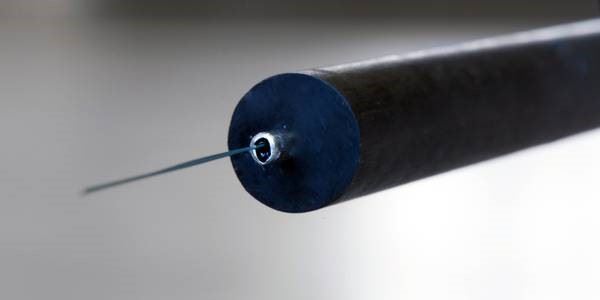
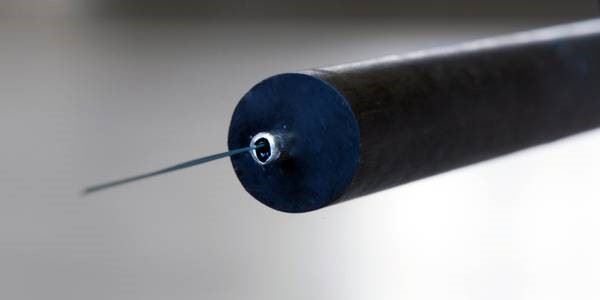
        Exel复合材料公司为挪威Ziebel公司创新的油井干预系统开发了光纤嵌入碳复合材料(DSC)。DSC在碳纤维拉挤方面的专业知识使精密制造具有光纤芯的15毫米直径的棒成为一种传感器,收集了传统方法无法实现的关于良好行为的宝贵的实时洞察。

提高采收率
Ziebel成立于2006年,其愿景是通过创新的技术和解决方案,为增加石油采收率做出贡献。为了作出明智的决定,石油钻井和完井队需要关于生产或注入期间井筒内和周围流体流动的详细信息。这类数据通常使用生产测井工具收集,但这种方法在操作上具有挑战性,并且提供有限的、特定于时间和位置的信息。Ziebel的专有技术,基于分布式光纤(DFO)的Z-系统,没有许多限制常规测井效果的限制,提高了对油井和储层行为的理解。

在Ziebel的Z-系统的中心是DSC制造的6.2公里长,15毫米直径的碳纤维棒(Z-Rod),它提供多个光纤电缆安全地进入恶劣的井下环境。通常,棒被部署到一个生产或注入井48小时,在那里光纤传感器测量温度和声波振动沿其长度。这使得各种应用-包括流量分配、流体运动可视化、泄漏检测和刺激流体监测-对优化井和油藏管理具有极其重要的价值。

这种基于复合的传感系统提供了进一步的优势。碳棒使水平井能够进入,因为轻质、刚性的复合杆可以从表面“推”到当今井中经常使用的水平段,除非使用电井拖拉机,否则常规工具在缆绳上运行是不可能的。此外,小直径碳棒可以进入内径受限和几何形状困难的井,其他工具无法通过,它对井的堵塞作用很小,与金属不同,它对井下环境中的大多数有害和腐蚀性物质是惰性的。

稳健的制造过程


      2006年,Ziebel与美国碳纤维拉挤专家DSC联系,开发和制造了在石油领域推出其光纤干预技术所需的坚固复合材料棒。

为了确保这种应用所需的强度、刚度和耐蚀性的结合,DSC选择了其专有的、坚韧的环氧树脂和经过广泛测试选择的特定碳纤维,以大限度地提高力学性能。这种树脂对拉挤过程提出了特别具有挑战性的要求,因为它需要非常缓慢的固化才能获得佳的性能。这意味着每生产6.2公里长的棒材,拉挤线必须连续运行,无故障,超过3周。

由于碳纤维和光纤的高成本,加工风险非常高,”DSC的技术和业务发展总监DavidLewis解释道。因此,我们开展了广泛的工作,开发出一种非常健壮和万无一失的拉挤工艺,并建立了特殊的工艺控制,以确保不出现故障。由于碳纤维和光纤的高成本,加工风险非常高,”DSC的技术和业务发展总监DavidLewis解释道。因此,我们开展了广泛的工作,开发出一种非常健壮和万无一失的拉挤工艺,并建立了特殊的工艺控制,以确保不出现故障。“

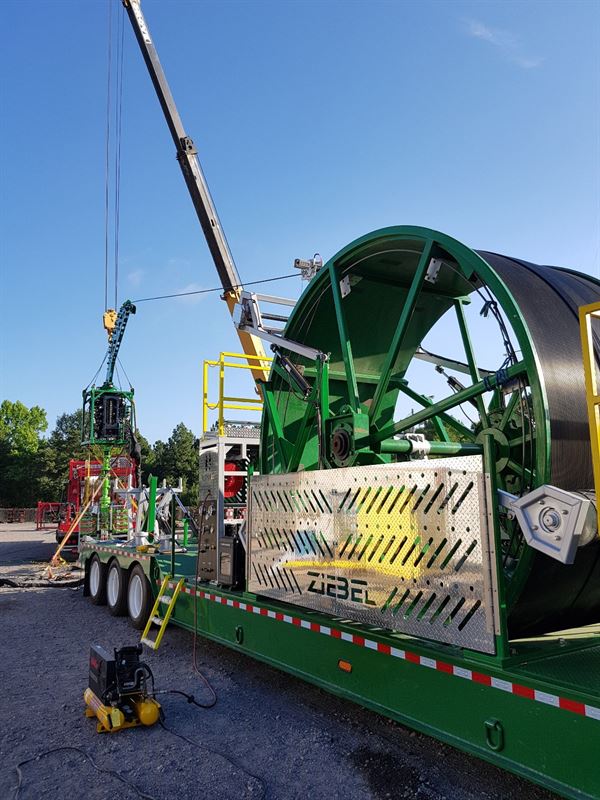
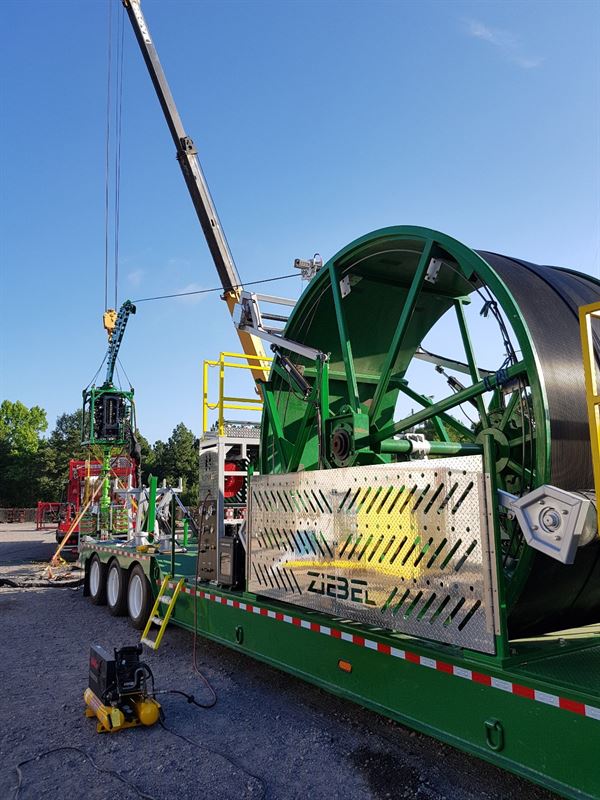
Ziebel和DSC合作优化了卷绕工艺,以方便长度拉挤杆的处理和运输。这使得硬碳纤维棒能够缠绕在直径足够小的卷筒上,以便从肯塔基州Erlanger的DSC生产工厂运往欧洲、中东以及美国境内。采用无损检测法对棒材质量进行监测,由于产品是连续的,不能切割检验。

未来发展
Ziebel致力于扩大他们的产品组合,通过创新他们目前的Z-Rod产品,以及其他类似应用的产品,这些产品将利用其尖端光纤传感和数据分析能力。

我们对DSC的合作伙伴有很大的信任和信心,这将使我们能够在充满敌意的油井和气井井下环境中继续推进碳复合材料的边界。齐贝尔的技术副总裁尼尔·加德纳(NeilGardner)说:“我们的下一代Z-Rod将把我们的工作温度提高到华氏350度(177摄氏度),为我们的服务开辟更多的油井。我们对DSC的合作伙伴有很大的信任和信心,这将使我们能够在充满敌意的油井和气井井下环境中继续推进碳复合材料的边界。齐贝尔的技术副总裁尼尔·加德纳(NeilGardner)说:“我们的下一代Z-Rod将把我们的工作温度提高到华氏350度(177摄氏度),为我们的服务开辟更多的油井。”

Ziebel和DSC已达成独家协议,开发和生产先进的光纤/复合井下传感器棒。

芬兰-总部位于芬兰的拉挤集团ExelComposites2018年5月收购了DSC,标志着它进入了美国市场。

我们祝贺Ziebel成功地引入了他们创新的油井干预系统,我们期待着与他们合作,以进一步扩大其应用,”Kari Loukola说,SVP Exel美洲复合材料和DSC总裁。“这个项目清楚地展示了DSC给Exel集团带来的碳拉挤能力,通过我们的合并、扩展,我们预计在石油和天然气部门以及风能和航空航天等其他关键市场将有重大机遇。我们祝贺Ziebel成功地引入了他们创新的油井干预系统,我们期待着与他们合作,以进一步扩大其应用,”Kari Loukola说,SVP Exel美洲复合材料和DSC总裁。“这个项目清楚地展示了DSC给Exel集团带来的碳拉挤能力,通过我们的合并、扩展,我们预计在石油和天然气部门以及风能和航空航天等其他关键市场将有重大机遇。”
原文如下:

Exel Composites company Diversified Structural Composites (DSC) has developed fiber optic-embedded carbon composite rod for Norwegian company Ziebel’s innovative well intervention system. DSC’s expertise in carbon fiber pultrusion enabled the precision manufacture of the 15 mm diameter rod with fiber optic core, which functions as a sensor, gathering valuable real-time insight on well behaviour unattainable using conventional methods.


Improving oil recovery factors
Ziebel was founded in 2006 with the vision to become a contributor to increased oil recovery factors through innovative technology and solutions. In order to make informed decisions, oil drilling and completions teams need detailed information on fluid flow in and around the borehole during production or injection. Such data is usually collected using production logging tools, but this method is operationally challenging and provides limited, time- and location-specific information. Ziebel’s proprietary technology, the distributed fiber optic (DFO)-based Z-System, is free of many of the constraints that limit conventional well logging effectiveness, offering improved understanding of well and reservoir behaviour.

At the heart of Ziebel’s Z-System is the DSC-manufactured 6.2 km long, 15 mm diameter carbon fiber rod (the Z-Rod), which delivers multiple fiber optic cables securely into the hostile downhole environment. Typically, the rod is deployed into a producing or injecting well for 48 hours wher the fiber optic sensors measure temperature and acoustic vibrations along its length. This enables a variety of applications – including flow allocation, fluid movement visualization, leak detection and stimulation fluid monitoring – which are extremely valuable for optimal well and reservoir management.

This composite-based sensing system offers further advantages. The carbon rod enables horizontal well access, since the lightweight, stiff composite rod can be 'pushed' from the surface into the horizontal sections frequently employed in today’s wells, which is not possible with conventional tools run on a wireline unless an electrical well tractor is employed. In addition, the small-diameter carbon rod can access wells with restricted internal diameters and difficult geometry wher other tools will not pass, it has minimal choking effect on the well, and unlike metals, it is inert to the majority of hazardous and corrosive substances found in the downhole environment.

A robust manufacturing process


Ziebel contacted US-based carbon fibre pultrusion specialist DSC in 2006 to develop and manufacture the robust composite rod required to launch its fiber optic intervention technology in the oil sector.

To ensure the required combination of strength, stiffness and corrosion resistance necessary for this application, DSC seleced one of its proprietary, tough epoxy resins and a specific carbon fiber seleced through extensive testing to maximize mechanical performance. This resin places particularly challenging demands on the pultrusion process, since it requires a very slow cure in order to attain its optimal properties. This means that to produce each 6.2 km long rod, the pultrusion line must run continuously, without fault, for more than 3 weeks.

nal process controls are in place to ensure that there are no failures.""Because of the high cost of both the carbon fiber and the fiber optics, the process risk is very high," David Lewis, DSC's Director of Technology & Business Development explains. "We've therefore performed extensive work to develop a pultrusion process that is extremely robust and foolproof, and exceptional process controls are in place to ensure that there are no failures."

Ziebel and DSC have worked together to optimize a spooling technology to facilitate the handling and transport of long lengths of pultruded rod. This enables the stiff carbon fiber rod to be wound onto reels that are small enough in diameter to allow shipping from DSC’s production facilities in Erlanger, Kentucky, to Europe and the Middle East as well as within the US. An NDT process is used to monitor rod quality, since the product is continuous it cannot be cut for inspection.

Future developments
Ziebel is committed to expanding their product portfolio, through innovations in their current Z-Rod product, as well as other products for similar applications that will take advantage of their cutting edge fiber optic sensing and data analysis capabilities.

nfidence in our partners at DSC that will enable us to continue pushing the boundaries for carbon composites in the hostile downhole environments of oil and gas wells. Our next generation of Z-Rod will take us to operating temperatures of 350 degrees F (177 degrees C), opening up additional wells for our services," Neil Gardner, Ziebel's Vice President of Technology says."We have a great deal of trust and confidence in our partners at DSC that will enable us to continue pushing the boundaries for carbon composites in the hostile downhole environments of oil and gas wells. Our next generation of Z-Rod will take us to operating temperatures of 350 degrees F (177 degrees C), opening up additional wells for our services," Neil Gardner, Ziebel's Vice President of Technology says.

Ziebel and DSC have entered an exclusive agreement to develop and produce advanced fiber optic/composite downhole sensor rods.

Finland-headquartered pultrusion group Exel Composites acquired DSC in May 2018, marking its entrance into the US market.

ngratulate Ziebel on the successful introduction of their innovative well intervention system and we look forward to collaborating with them to further extend its application," states Kari Loukola, SVP Exel Composites Americas and President of DSC. "This project is a clear demonstration of the capabilities in carbon pultrusion that DSC brings to the Exel group and with our combined, expanded offering we anticipate significant opportunities in the oil and gas sector and other key markets such as wind energy and aerospace "We congratulate Ziebel on the successful introduction of their innovative well intervention system and we look forward to collaborating with them to further extend its application," states Kari Loukola, SVP Exel Composites Americas and President of DSC. "This project is a clear demonstration of the capabilities in carbon pultrusion that DSC brings to the Exel group and with our combined, expanded offering we anticipate significant opportunities in the oil and gas sector and other key markets such as wind energy and aerospace."

More information:
WWW.EXELCOMPOSITES.COM