 English
 简体中文
简体中文

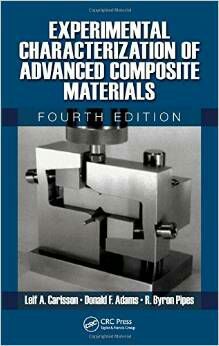
复合材料英文经典著作(七)《先进复合材料的实验表征》
作者:Leif A.Carlsson, Donald F.Adams, R.Byron Pipes
出版社:泰勒弗朗西斯出版集团CRC出版社,2014年第四版
内容简介:
过去三十年随着复合材料技术的进步和应用领域的拓展复合材料实验测试技术飞速发展。近年来,已完成的大量研究工作有助于更好地理解所使用的测试方法,达成共识,为实验表征采用的测试方法给出解决方案。
《先进复合材料的实验表征》(第四版)为复合材料的力学性能、热膨胀系数、断裂和强度指标的测试提供了一套简洁、实用的方法。书中从实际出发给出了试样加工、样品制备、分析测试方法、测试程序和数据采集方案。第五章涵盖了单层板的测试,并可推广到层压板的响应测试。书中尾采用详细的缺陷检验和断裂力学测试方法研究复合材料的耐久性。
第四版修订包括:
(1)新的图表,更新了ASTM标准,增加了索引;
(2)主要增加内容:热固性树脂试样加工,树脂浇注体测试,夹层结构,固化分析,损伤容限测试,单纤维测试,纤维基体界面测试,层间拉伸测试,厚度方向拉伸和压缩测试,开孔压缩测试,落锤冲击测试,冲击试验后的压缩测试,夹层梁和芯材测试等。
书中简洁的阐述、详细的测试步骤和专家评估,为复合材料制造、测试工程师、实验室技术人员和其他专业人士,以及学生、研究人员、政府研究和工程部门提供了优秀的资源。汇集了迄今为止被广泛接受适用的测试方法。
目录:
1 Introduction
1.1 Background
1.2 Laminate Orientation Code
1.2.1 Standard Laminate Code
1.2.2 Basic Condensed Code
1.2.3 Specific Condensed Code
1.2.4 Summary
1.3 Influence of Material Orthotropy on Experimental Characterization
1.3.1 Material and Geometric Coordinates
1.3.2 Stress–Strain Relations for Anisotropic Materials
1.4 Typical Unidirectional Composite Properties
2 Analysis of Composite Materials
2.1 Constitutive Relations
2.1.1 Transformation of Stresses and Strains
2.1.2 Hygrothermal Strains
2.2 Micromechanics
2.2.1 Stiffness Properties of Unidirectional Composites
2.2.2 Expansion Coefficients
2.3 Laminated Plate Theory
2.4 St. Venant’s Principle and End Effects in Composites
2.5 Lamina Strength Analysis
2.5.1 Maximum Stress Failure Criterion
2.5.2 Maximum Strain Failure Criterion
2.5.3 Tsai-Wu Failure Criterion
2.6 Laminate Strength Analysis
2.7 Fracture Mechanics Concepts
2.8 Strength of Composite Laminates Containing Holes
3 Processing of Composite Laminates
3.1 Introduction
3.2 Characterization of Thermoset Matrices
3.2.1 Phenomenological Cure Kinetic Coefficients
3.2.2 Gelation of the Thermoset Polymer
3.2.3 Viscosity and Cure Kinetics
3.3 Processing of Thermoset Composites
3.3.1 Autoclave Molding
3.3.2 Resin Transfer Molding of Thermoset Composites
3.3.2.1 Vacuum-Assisted Resin Transfer Molding
3.4 Autoclave Processing of Thermoplastic Composites
3.5 Determination of Volume Fractions of Fibers, Resin, and Voids
3.5.1 Chemical Matrix Digestion Method
3.5.1.1 Procedure
3.5.1.2 Calculation of Fiber Volume Fraction
3.5.1.3 Determination of Void Content
3.5.2 Photomicrographic Method
3.5.2.1 Procedure
3.5.2.2 Determination of Fiber Volume Fraction
4 Test Specimen Preparation, Strain and Deformation Measurement Devices, and Testing Machines
4.1 Introduction
4.2 Cutting the Composite Laminate
4.3 Preparation of Neat Resin Panels and Test Specimens
4.4 Preparation of Single-Fiber Fragmentation Test Specimen
4.4.1 Mold Fabrication
4.4.2 Molding of SFFT Specimen
4.5 Tabbing Materials
4.6 Tab Bonding
4.6.1 Suggested Tab-Bonding Procedure
4.7 Compression Test Specimen Preparation
4.8 Hinge Attachment for Double-Cantilever Beam and Mixed-Mode Bending Specimens
4.9 Sandwich Panel Manufacturing
4.10 Interlaminar Tension Specimens
4.10.1 Flatwise Tensile Specimens
4.10.2 Curved-Beam Interlaminar Tension Test Specimen
4.11 Specimen Conditioning
4.12 Strain and Displacement Measurements
4.13 Testing Machines
5 Cure Shrinkage and Residual Stress Testing of Resins
5.1 Cure Shrinkage in Thermosets
5.2 Modulus versus Cure State
5.3 Coated Beam Cure Shrinkage and Residual Stress Test
6 Single-Fiber Tensile Testing and Matrix Characterization Tests
6.1 Introduction
6.2 Single-Filament Test
6.2.1 Single-Filament Test Procedure
6.2.2 Data Reduction for Modulus and Strength
6.3 Matrix Test Methods
6.3.1 Matrix Tensile Testing
6.3.2 Matrix Compressive Testing
6.3.3 Matrix Shear Testing
7 Fiber/Matrix Interface Tests
7.1 Introduction
7.2 Single-Fiber Fragmentation Test 7.3 Single-Fiber Fragmentation Test Setup
7.4 SFFT Test Procedure
8 Lamina Tensile Response
8.1 The Need for Lamina Testing
8.2 Introduction to Tensile Testing
8.3 Load Introduction
8.4 Specimen Configurations and Test Procedures
8.5 Data Reduction
9 Lamina Compressive Response
9.1 Introduction
9.2 Shear-Loading Test Methods
9.3 End-Loading Test Methods
9.4 Combined Loading Compression Test Methods
9.5 Compression Test Procedures
9.5.1 IITRI Test Procedure
9.5.2 Modified ASTM D695 Test Procedure
9.5.3 CLC Test Procedure
9.6 Failure Modes
9.7 General Data Reduction
9.8 Indirect Determination of Unidirectional Lamina Strength
from a Test of a Cross-Ply Laminate
10 Lamina Shear Response
10.1 Introduction
10.2 Iosipescu Shear Test Method
10.3 Two-Rail Shear Test Method
10.4 Three-Rail Shear Test Method
10.5 V-Notched Rail Shear Test Method
10.6 [±45]nsTensile Shear Test Method
10.7 Short-Beam Shear Test Method
11 Lamina Flexural Response
11.1 Introduction
11.2 Testing Configurations
11.3 Three- versus Four-Point Flexure
11.4 Specimen Preparation and Flexure Test Procedure
11.5 Data Reduction
12 Lamina Off-Axis Tensile Response
12.1 Introduction
12.2 Deformation and Stress in an Unconstrained Off-Axis Specimen
12.3 Influence of End Constraint
12.4 Off-Axis Tensile Strength
12.5 Test Procedure
12.6 Data Reduction
12.6.1 Elastic Properties
12.6.2 Tensile Strength of Off-Axis Specimen
13 Lamina and Laminate Thermoelastic Response
13.1 Introduction
13.2 Temperature Gage Sensing System
13.3 Temperature Compensation and CTE Measurements
13.4 Measurement of Thermal Expansion
13.5 Data Reduction for CTEs
13.6 Analysis of Thermal Expansion of Symmetric and Balanced Laminates
13.6.1 Example of Analysis of Laminate Thermal Expansion
14 Through-Thickness Tension and Compression Testing
14.1 Introduction
14.2 Flatwise Through-Thickness Tensile Test
14.3 Curved-Beam Tests for Interlaminar Tensile Strength
14.4 Flexure Test of Curved Specimens
14.4.1 Four-Point Flexure Test Procedure
14.4.2 Determination of Through-Thickness Tensile Strength
14.5 Tensile Test of Curved Specimens
15.6 Through-Thickness Compressive Test
15 Laminate Mechanical Response
15.1 Introduction
15.2 Analysis of Extesional and Shear Stiffness Properties of Laminates
15.2.1 Laminate Strength Analysis
15.3 Analysis of Laminate Beam Flexure
15.4 Test Specimen Preparation
15.5 Test Procedures
15.5.1 Tension Test Procedures
15.5.2 Compression Test Procedures
15.5.3 Shear Test Procedures
15.5.4 Flexural Test Procedures
15.6 Data Reduction
15.7 Example of a Typical Analysis: Axial Tensile Response of a Laminate
16 Strength of Laminates with Holes
16.1 Introduction
16.2 Point and Average Stress Criteria
16.2.1 Point Stress Criterion
16.2.2 Average Stress Criterion
16.2.3 Modification of PSC
16.3 Test Specimen Preparation
16.4 Tensile Test Procedure and Data Reduction
16.5 Standardized Open-Hole Tension Test Method
16.6 Standardized Open-Hole Compression Test Methods
16.6.1 Boeing Open-Hole Compression Test Method
16.6.2 Northrop Open-Hole Compression Test Method
16.6.3 Comparison of the Boeing and Northrop Open-Hole
Compression Test Methods
16.6.4 Filled-Hole Tension and Compression Test Methods
17 Characterization of Delamination Failure
17.1 Introduction
17.2 Double-Cantilever Beam Test (Mode I)
17.2.1 DCB Specimen Preparation and Test Procedure
17.2.2 DCB Data Reduction
17.3 End-Notched Flexure Test (Mode II)
17.3.1 ENF Specimen Preparation and Test Procedure
17.3.2 ENF Data Reduction
17.4 Mixed-Mode Bending Test (Mixed-Mode I and II)
17.4.1 MMB Test Procedure
17.4.2 MMB Data Reduction
17.5 Edge-Cracked Torsion Test (Mode III)
17.5.1 ECT Specimen Preparation
17.5.2 ECT Test Fixture
17.5.3 ECT Test Procedure
17.5.4 ECT Data Reduction
18 Damage Tolerance Testing
18.1 Introduction
18.2 Falling Weight Impact Testing
18.2.1 dro-Weight Impact Test Machine
18.2.2 Support Fixture and Impactor
18.2.3 Impact Test Specimen
18.2.4 Instrumentation
18.2.5 Impact Testing
18.2.6 Example of Impact Test Results
18.2.7 Postimpact Damage Inspection
18.3 Compression-after-Impact (CAI) Testing
18.3.1 CAI Test Fixture
18.3.2 CAI Test Specimen
18.3.3 CAI Test Procedure and evaluation of Test Results
18.3.4 Example of CAI Test Results
19 Sandwich Beam and Core Testing
19.1 Introduction
19.2 Sandwich Beam Flexure
19.2.1 evaluation of Core Shear and Face Tensile or Compressive Strengths
19.3 Sandwich Core Shear Testing
19.4 Sandwich Through-Thickness Tensile Testing
19.5 Sandwich Core Compression Testing
19.6 Sandwich Edge Compression Test
19.6.1 Test Specimen
19.6.2 Compression Test Fixture
19.6.3 Compression Test Procedure
19.6.4 Postfailure Observations and Data Reduction
19.6.5 Examples of Edgewise Compression Testing
Appendix A: Compliance and Stiffness Transformations and Matrix Operations
Appendix B: Preparation of Test Specimens and Panels
Appendix C: Sample Laboratory Report
Appendix D: Unit Conversions
更多信息请关注复材网www.cnfrp.com
出版社:泰勒弗朗西斯出版集团CRC出版社,2014年第四版
内容简介:
过去三十年随着复合材料技术的进步和应用领域的拓展复合材料实验测试技术飞速发展。近年来,已完成的大量研究工作有助于更好地理解所使用的测试方法,达成共识,为实验表征采用的测试方法给出解决方案。
《先进复合材料的实验表征》(第四版)为复合材料的力学性能、热膨胀系数、断裂和强度指标的测试提供了一套简洁、实用的方法。书中从实际出发给出了试样加工、样品制备、分析测试方法、测试程序和数据采集方案。第五章涵盖了单层板的测试,并可推广到层压板的响应测试。书中尾采用详细的缺陷检验和断裂力学测试方法研究复合材料的耐久性。
第四版修订包括:
(1)新的图表,更新了ASTM标准,增加了索引;
(2)主要增加内容:热固性树脂试样加工,树脂浇注体测试,夹层结构,固化分析,损伤容限测试,单纤维测试,纤维基体界面测试,层间拉伸测试,厚度方向拉伸和压缩测试,开孔压缩测试,落锤冲击测试,冲击试验后的压缩测试,夹层梁和芯材测试等。
书中简洁的阐述、详细的测试步骤和专家评估,为复合材料制造、测试工程师、实验室技术人员和其他专业人士,以及学生、研究人员、政府研究和工程部门提供了优秀的资源。汇集了迄今为止被广泛接受适用的测试方法。
目录:
1 Introduction
1.1 Background
1.2 Laminate Orientation Code
1.2.1 Standard Laminate Code
1.2.2 Basic Condensed Code
1.2.3 Specific Condensed Code
1.2.4 Summary
1.3 Influence of Material Orthotropy on Experimental Characterization
1.3.1 Material and Geometric Coordinates
1.3.2 Stress–Strain Relations for Anisotropic Materials
1.4 Typical Unidirectional Composite Properties
2 Analysis of Composite Materials
2.1 Constitutive Relations
2.1.1 Transformation of Stresses and Strains
2.1.2 Hygrothermal Strains
2.2 Micromechanics
2.2.1 Stiffness Properties of Unidirectional Composites
2.2.2 Expansion Coefficients
2.3 Laminated Plate Theory
2.4 St. Venant’s Principle and End Effects in Composites
2.5 Lamina Strength Analysis
2.5.1 Maximum Stress Failure Criterion
2.5.2 Maximum Strain Failure Criterion
2.5.3 Tsai-Wu Failure Criterion
2.6 Laminate Strength Analysis
2.7 Fracture Mechanics Concepts
2.8 Strength of Composite Laminates Containing Holes
3 Processing of Composite Laminates
3.1 Introduction
3.2 Characterization of Thermoset Matrices
3.2.1 Phenomenological Cure Kinetic Coefficients
3.2.2 Gelation of the Thermoset Polymer
3.2.3 Viscosity and Cure Kinetics
3.3 Processing of Thermoset Composites
3.3.1 Autoclave Molding
3.3.2 Resin Transfer Molding of Thermoset Composites
3.3.2.1 Vacuum-Assisted Resin Transfer Molding
3.4 Autoclave Processing of Thermoplastic Composites
3.5 Determination of Volume Fractions of Fibers, Resin, and Voids
3.5.1 Chemical Matrix Digestion Method
3.5.1.1 Procedure
3.5.1.2 Calculation of Fiber Volume Fraction
3.5.1.3 Determination of Void Content
3.5.2 Photomicrographic Method
3.5.2.1 Procedure
3.5.2.2 Determination of Fiber Volume Fraction
4 Test Specimen Preparation, Strain and Deformation Measurement Devices, and Testing Machines
4.1 Introduction
4.2 Cutting the Composite Laminate
4.3 Preparation of Neat Resin Panels and Test Specimens
4.4 Preparation of Single-Fiber Fragmentation Test Specimen
4.4.1 Mold Fabrication
4.4.2 Molding of SFFT Specimen
4.5 Tabbing Materials
4.6 Tab Bonding
4.6.1 Suggested Tab-Bonding Procedure
4.7 Compression Test Specimen Preparation
4.8 Hinge Attachment for Double-Cantilever Beam and Mixed-Mode Bending Specimens
4.9 Sandwich Panel Manufacturing
4.10 Interlaminar Tension Specimens
4.10.1 Flatwise Tensile Specimens
4.10.2 Curved-Beam Interlaminar Tension Test Specimen
4.11 Specimen Conditioning
4.12 Strain and Displacement Measurements
4.13 Testing Machines
5 Cure Shrinkage and Residual Stress Testing of Resins
5.1 Cure Shrinkage in Thermosets
5.2 Modulus versus Cure State
5.3 Coated Beam Cure Shrinkage and Residual Stress Test
6 Single-Fiber Tensile Testing and Matrix Characterization Tests
6.1 Introduction
6.2 Single-Filament Test
6.2.1 Single-Filament Test Procedure
6.2.2 Data Reduction for Modulus and Strength
6.3 Matrix Test Methods
6.3.1 Matrix Tensile Testing
6.3.2 Matrix Compressive Testing
6.3.3 Matrix Shear Testing
7 Fiber/Matrix Interface Tests
7.1 Introduction
7.2 Single-Fiber Fragmentation Test 7.3 Single-Fiber Fragmentation Test Setup
7.4 SFFT Test Procedure
8 Lamina Tensile Response
8.1 The Need for Lamina Testing
8.2 Introduction to Tensile Testing
8.3 Load Introduction
8.4 Specimen Configurations and Test Procedures
8.5 Data Reduction
9 Lamina Compressive Response
9.1 Introduction
9.2 Shear-Loading Test Methods
9.3 End-Loading Test Methods
9.4 Combined Loading Compression Test Methods
9.5 Compression Test Procedures
9.5.1 IITRI Test Procedure
9.5.2 Modified ASTM D695 Test Procedure
9.5.3 CLC Test Procedure
9.6 Failure Modes
9.7 General Data Reduction
9.8 Indirect Determination of Unidirectional Lamina Strength
from a Test of a Cross-Ply Laminate
10 Lamina Shear Response
10.1 Introduction
10.2 Iosipescu Shear Test Method
10.3 Two-Rail Shear Test Method
10.4 Three-Rail Shear Test Method
10.5 V-Notched Rail Shear Test Method
10.6 [±45]nsTensile Shear Test Method
10.7 Short-Beam Shear Test Method
11 Lamina Flexural Response
11.1 Introduction
11.2 Testing Configurations
11.3 Three- versus Four-Point Flexure
11.4 Specimen Preparation and Flexure Test Procedure
11.5 Data Reduction
12 Lamina Off-Axis Tensile Response
12.1 Introduction
12.2 Deformation and Stress in an Unconstrained Off-Axis Specimen
12.3 Influence of End Constraint
12.4 Off-Axis Tensile Strength
12.5 Test Procedure
12.6 Data Reduction
12.6.1 Elastic Properties
12.6.2 Tensile Strength of Off-Axis Specimen
13 Lamina and Laminate Thermoelastic Response
13.1 Introduction
13.2 Temperature Gage Sensing System
13.3 Temperature Compensation and CTE Measurements
13.4 Measurement of Thermal Expansion
13.5 Data Reduction for CTEs
13.6 Analysis of Thermal Expansion of Symmetric and Balanced Laminates
13.6.1 Example of Analysis of Laminate Thermal Expansion
14 Through-Thickness Tension and Compression Testing
14.1 Introduction
14.2 Flatwise Through-Thickness Tensile Test
14.3 Curved-Beam Tests for Interlaminar Tensile Strength
14.4 Flexure Test of Curved Specimens
14.4.1 Four-Point Flexure Test Procedure
14.4.2 Determination of Through-Thickness Tensile Strength
14.5 Tensile Test of Curved Specimens
15.6 Through-Thickness Compressive Test
15 Laminate Mechanical Response
15.1 Introduction
15.2 Analysis of Extesional and Shear Stiffness Properties of Laminates
15.2.1 Laminate Strength Analysis
15.3 Analysis of Laminate Beam Flexure
15.4 Test Specimen Preparation
15.5 Test Procedures
15.5.1 Tension Test Procedures
15.5.2 Compression Test Procedures
15.5.3 Shear Test Procedures
15.5.4 Flexural Test Procedures
15.6 Data Reduction
15.7 Example of a Typical Analysis: Axial Tensile Response of a Laminate
16 Strength of Laminates with Holes
16.1 Introduction
16.2 Point and Average Stress Criteria
16.2.1 Point Stress Criterion
16.2.2 Average Stress Criterion
16.2.3 Modification of PSC
16.3 Test Specimen Preparation
16.4 Tensile Test Procedure and Data Reduction
16.5 Standardized Open-Hole Tension Test Method
16.6 Standardized Open-Hole Compression Test Methods
16.6.1 Boeing Open-Hole Compression Test Method
16.6.2 Northrop Open-Hole Compression Test Method
16.6.3 Comparison of the Boeing and Northrop Open-Hole
Compression Test Methods
16.6.4 Filled-Hole Tension and Compression Test Methods
17 Characterization of Delamination Failure
17.1 Introduction
17.2 Double-Cantilever Beam Test (Mode I)
17.2.1 DCB Specimen Preparation and Test Procedure
17.2.2 DCB Data Reduction
17.3 End-Notched Flexure Test (Mode II)
17.3.1 ENF Specimen Preparation and Test Procedure
17.3.2 ENF Data Reduction
17.4 Mixed-Mode Bending Test (Mixed-Mode I and II)
17.4.1 MMB Test Procedure
17.4.2 MMB Data Reduction
17.5 Edge-Cracked Torsion Test (Mode III)
17.5.1 ECT Specimen Preparation
17.5.2 ECT Test Fixture
17.5.3 ECT Test Procedure
17.5.4 ECT Data Reduction
18 Damage Tolerance Testing
18.1 Introduction
18.2 Falling Weight Impact Testing
18.2.1 dro-Weight Impact Test Machine
18.2.2 Support Fixture and Impactor
18.2.3 Impact Test Specimen
18.2.4 Instrumentation
18.2.5 Impact Testing
18.2.6 Example of Impact Test Results
18.2.7 Postimpact Damage Inspection
18.3 Compression-after-Impact (CAI) Testing
18.3.1 CAI Test Fixture
18.3.2 CAI Test Specimen
18.3.3 CAI Test Procedure and evaluation of Test Results
18.3.4 Example of CAI Test Results
19 Sandwich Beam and Core Testing
19.1 Introduction
19.2 Sandwich Beam Flexure
19.2.1 evaluation of Core Shear and Face Tensile or Compressive Strengths
19.3 Sandwich Core Shear Testing
19.4 Sandwich Through-Thickness Tensile Testing
19.5 Sandwich Core Compression Testing
19.6 Sandwich Edge Compression Test
19.6.1 Test Specimen
19.6.2 Compression Test Fixture
19.6.3 Compression Test Procedure
19.6.4 Postfailure Observations and Data Reduction
19.6.5 Examples of Edgewise Compression Testing
Appendix A: Compliance and Stiffness Transformations and Matrix Operations
Appendix B: Preparation of Test Specimens and Panels
Appendix C: Sample Laboratory Report
Appendix D: Unit Conversions
更多信息请关注复材网www.cnfrp.com